Why the World Still Looks to Reggio Emilia
This week, Catherine, Princess of Wales, is visiting the town of Reggio Emilia in Italy as part of her ongoing work championing the importance of early childhood.
It is a significant moment, and one that reflects the growing global understanding that the early years are not simply preparation for later life, but the foundation upon which everything else is built.
For decades, educators, researchers and policymakers from around the world have travelled to Reggio Emilia to better understand the city’s internationally respected approach to early childhood education. Its influence can now be seen across nurseries, schools and universities worldwide, particularly within settings that value relationships, creativity, curiosity and child-led learning.
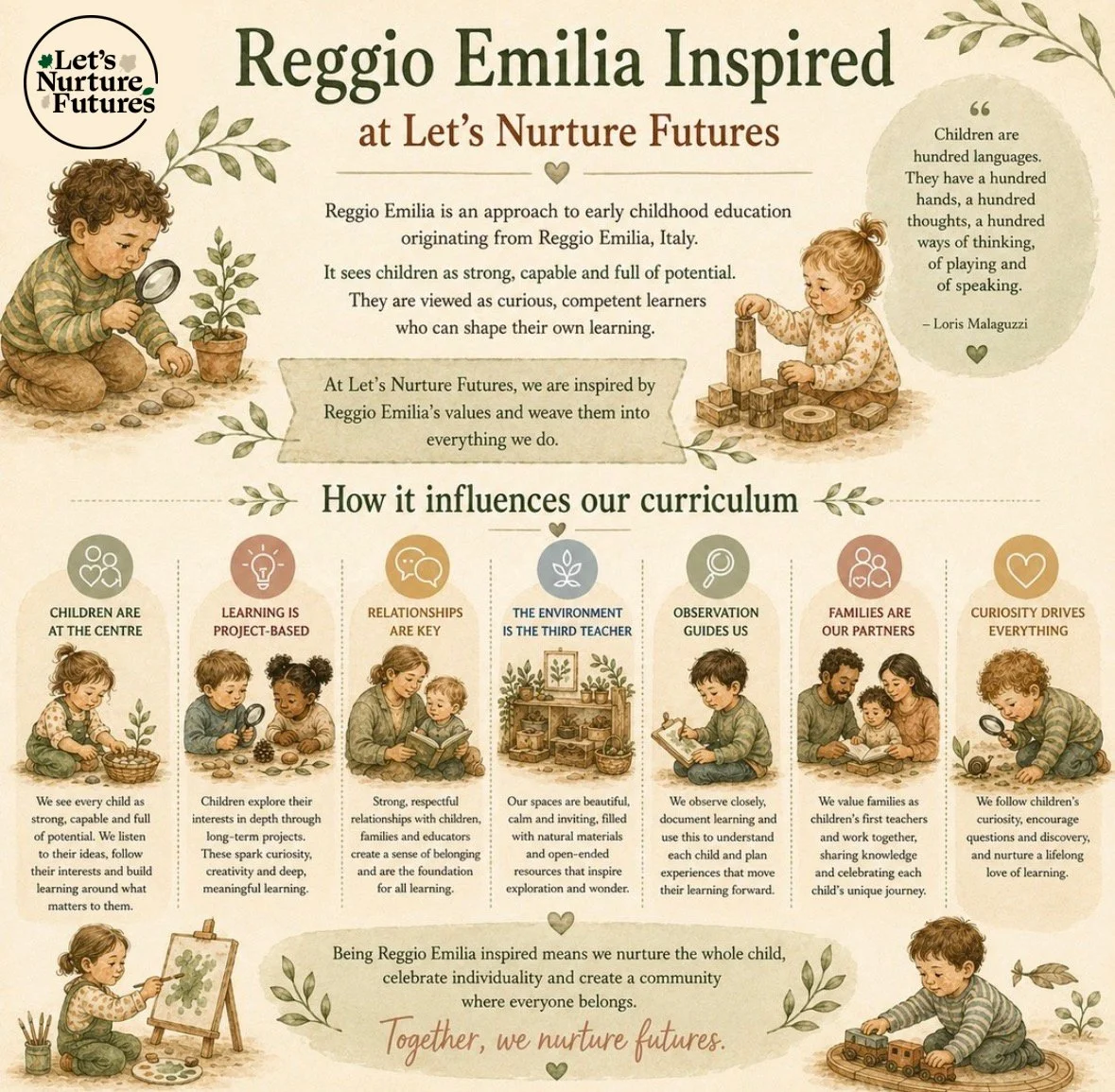
At KatieB Kids, we are proud to describe ourselves as Reggio Emilia inspired, with its strong influence on our own Let’s Nurture Futures™ curriculum.
But what does that actually mean?
The Origins of the Reggio Emilia Approach
The Reggio Emilia approach originated in the town of Reggio Emilia in northern Italy following the Second World War.
In the aftermath of the war, local families wanted something different for their children and for the future of their community. Parents and educators came together with a shared belief that children deserved an education rooted in democracy, respect, critical thinking and human connection.
This vision was later developed and shaped by educator and psychologist Loris Malaguzzi, an Italian educator and founder of the Reggio Emilia approach, whose work became central to the philosophy.
Malaguzzi believed that children are not empty vessels waiting to be filled with knowledge. Instead, they are capable, intelligent, curious individuals who actively construct meaning through their experiences, relationships and environment.
This idea remains at the heart of the Reggio Emilia philosophy today.
The Image of the Child
One of the most influential ideas within the Reggio Emilia approach is the concept of the “image of the child.”
Rather than viewing children as passive recipients of adult instruction, the approach sees children as:
capable
competent
creative
curious
rich in potential
This deeply resonates with our own values at KatieB Kids.
Children are not seen as problems to fix or empty cups to fill. They are seen as active participants in their own learning journey, each bringing their own ideas, theories, interests and ways of communicating.
As educators, our role is not simply to direct learning, but to listen carefully, observe thoughtfully and work alongside children as co-constructors of knowledge.
Relationships at the Centre
The Reggio Emilia approach places relationships at the centre of education.
Learning does not happen in isolation. It happens through connection.
Children learn through meaningful interactions with:
trusted adults
peers
families
the environment around them
the wider community
At KatieB Kids, this aligns closely with our relationship-led approach.
We recognise that children learn best when they feel emotionally safe, connected and understood. Secure relationships create the conditions for confidence, communication, exploration and emotional wellbeing to flourish.
This is why so much of our practice focuses not only on what children are learning, but how they are feeling.
The Environment as the “Third Teacher”
One of the best-known aspects of the Reggio Emilia approach is the idea that the environment acts as the “third teacher.”
In Reggio-inspired settings, environments are intentionally designed to:
invite curiosity
encourage independence
promote collaboration
provoke investigation
communicate respect for children
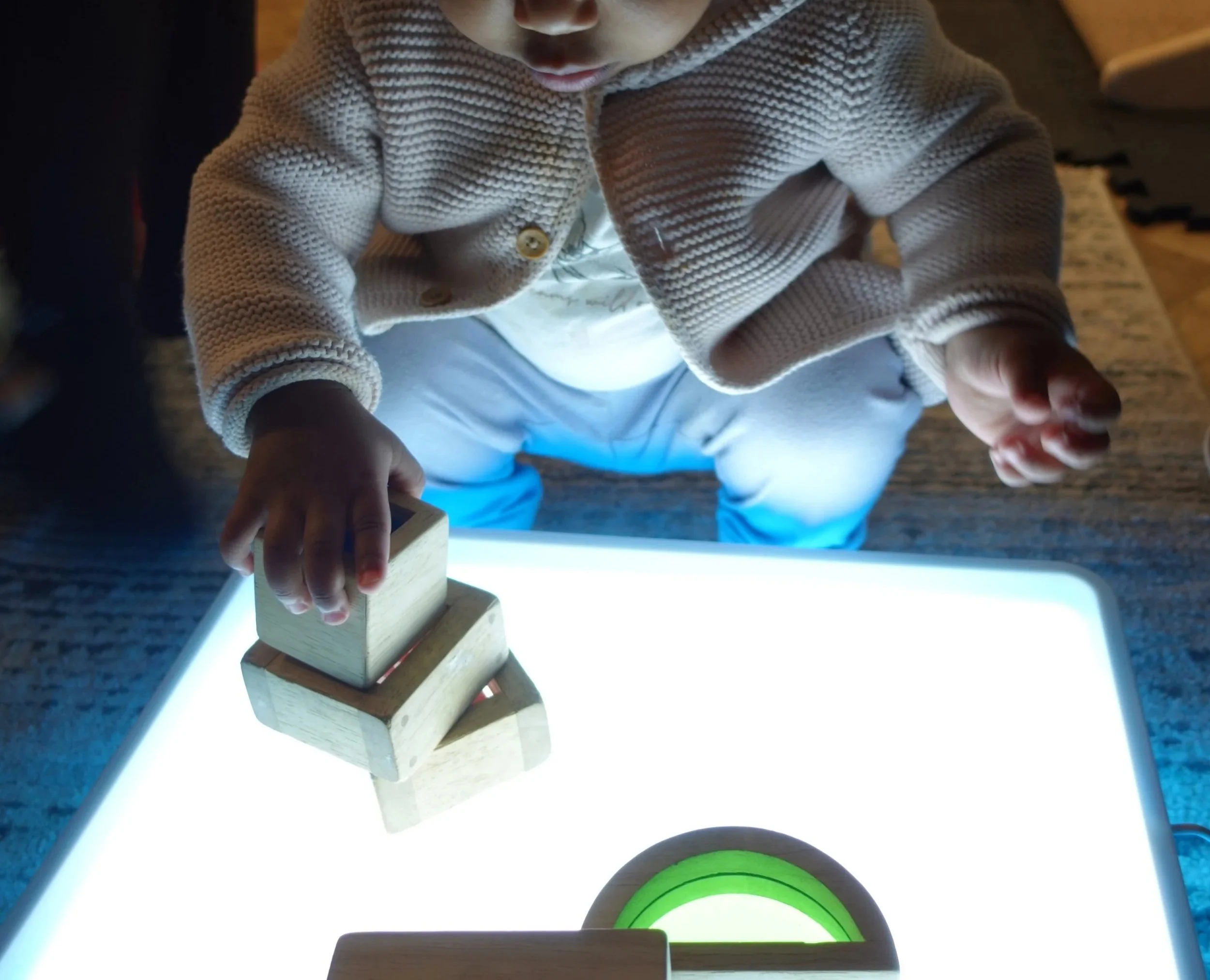
Resources are presented thoughtfully and beautifully. Natural materials, loose parts, light, texture and open-ended resources are valued because they encourage children to think creatively and explore in their own ways.
At KatieB Kids, our environments are carefully curated to support exploration rather than passive entertainment.
You will often see:
open-ended materials
calming, natural colour palettes
accessible resources
invitations to investigate
authentic tools and objects
child-led provocations
spaces that evolve in response to children’s interests
The environment is not viewed as decoration. It is viewed as part of the learning process itself.
The Hundred Languages of Children
Another core principle of the Reggio Emilia philosophy is the belief that children express themselves in “a hundred languages.”
This refers to the many ways children communicate their thinking, including through:
play
movement
art
music
storytelling
construction
role play
mark making
sensory exploration
facial expression
body language
Not all children communicate most confidently through spoken language alone.
This principle is particularly important within inclusive early childhood education because it reminds us that every child deserves opportunities to express themselves in ways that feel meaningful and accessible to them.
At KatieB Kids, we value communication in all its forms.
This can be seen in our use of:
loose parts play
sensory experiences
process-led art
storytelling
puppetry
music and movement
visual communication
Makaton and multilingual opportunities
child-led creative exploration
We believe children should not need to fit into one narrow definition of learning in order to succeed.
Observation, Reflection and Responsive Practice
In Reggio-inspired practice, observation is not simply about assessment.
It is about understanding.
Educators spend time carefully observing children in order to understand:
what children are interested in
how they are thinking
what theories they may be exploring
what support or provocation may deepen learning further
This reflective approach strongly influences our own practice at KatieB Kids.
Rather than relying solely on predetermined activities or rigid adult-led outcomes, we aim to remain responsive to children’s emerging interests, schemas and fascinations.
This is why learning at KatieB Kids may sometimes look different from more traditional models of education.
You may see children:
revisiting the same experience repeatedly
deeply investigating a particular interest
exploring through movement or sensory play
engaging in open-ended exploration without a fixed “end product”
This repetition and exploration is not “just play.” It is meaningful learning.
Why Reggio Emilia Still Matters Today
The continued global interest in Reggio Emilia reflects something important.
At a time when childhood can increasingly feel rushed, outcome-driven and overstimulated, the Reggio Emilia philosophy reminds us that children deserve:
time
connection
creativity
belonging
wonder
opportunities to think deeply
environments that respect them
It reminds us that early childhood is valuable in its own right.
Not simply because of who children may become in the future — but because of who they already are.
Reggio Emilia at KatieB Kids
Being Reggio Emilia inspired does not mean replicating another setting exactly.
Instead, it means drawing upon principles that align closely with our own ethos and values:
relationship-led practice
emotional wellbeing
child voice
curiosity and critical thinking
enabling environments
creativity and self-expression
reflective practice
respect for children as capable learners
Our practice is also shaped by many other influences, including contemporary child development research, Forest School principles, inclusive practice and our own Let’s Nurture Futures™ curriculum.
However, the influence of Reggio Emilia can be seen throughout our everyday practice; in the way we listen to children, the way we design our environments, the way we value creativity and the way we see childhood itself.
Because when children feel safe, respected and deeply understood, they do not simply participate in learning.
They flourish.
As part of our own ongoing reflective practice and professional development, Tina and Hayley from our management team will also be travelling to Reggio Emilia in two weeks’ time to continue deepening their understanding of the philosophy and exploring how its principles continue to evolve within modern early childhood education. . At KatieB Kids, professional learning is not viewed as a one-off training event, but as an ongoing process of reflection, research and development that sits at the heart of our Let’s Nurture Futures™ framework. Opportunities such as this help ensure our practice continues to evolve thoughtfully, remains aligned with current research and best practice, and supports educators to translate theory into meaningful lived experiences for children every day.
We look forward to bringing back further inspiration, reflection and ideas to continue nurturing meaningful, thoughtful and future-ready learning experiences for the children in our care.