Schemas: A window into your child’s learning
Have you ever noticed your child doing the same things over and over again?
Throwing food off the high chair, pressing a button on a toy so it does a really annoying sound repetitively?!
Some insist on putting the same jigsaw together every day, or they might hide your phone or car keys in shoes or underneath blankets. All children have particular habits that can drive parents a little bit crazy, but it may help to know that there’s a reason for repetitive behaviours – your little discoverer is simply learning about the world around them and trying to figure out how things work.
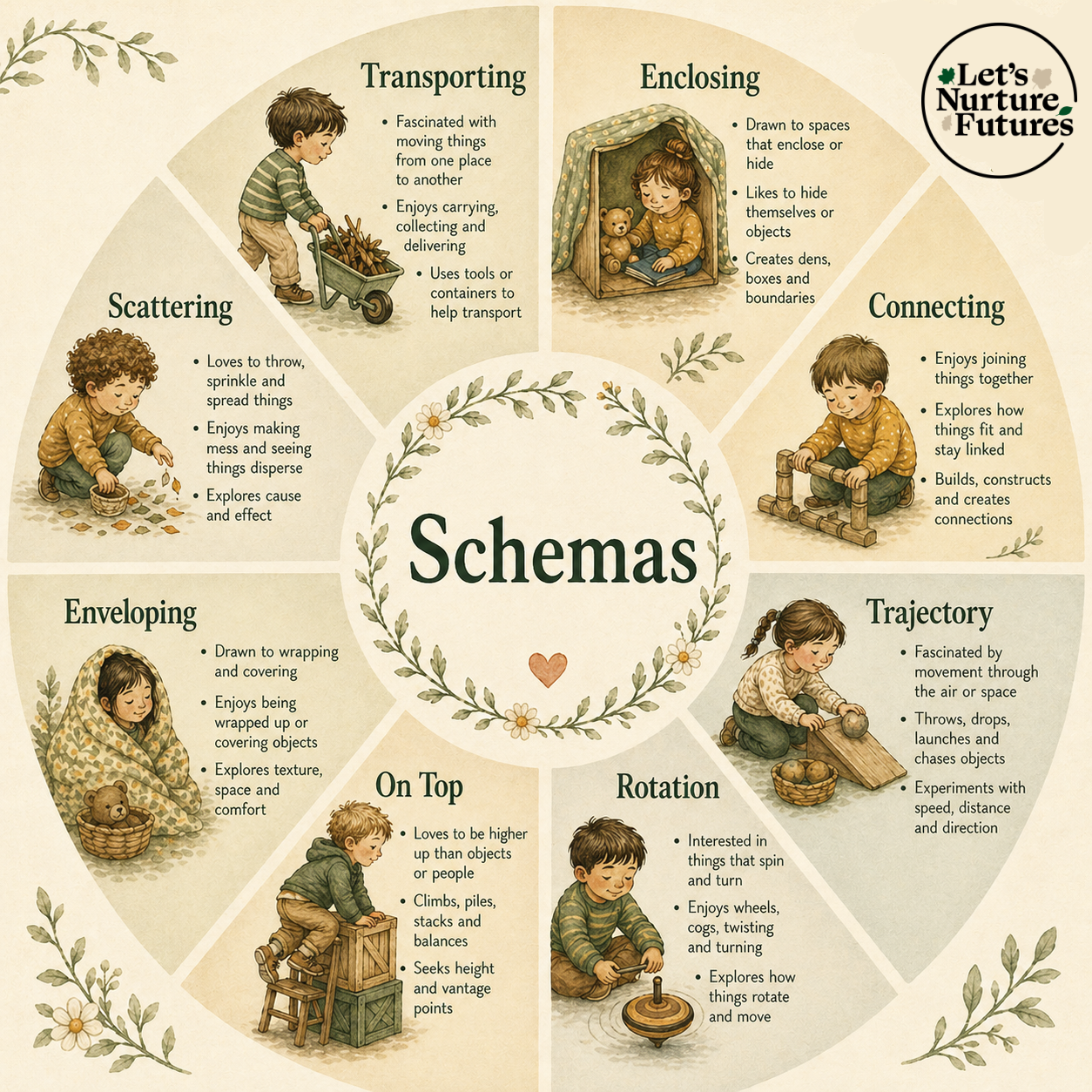
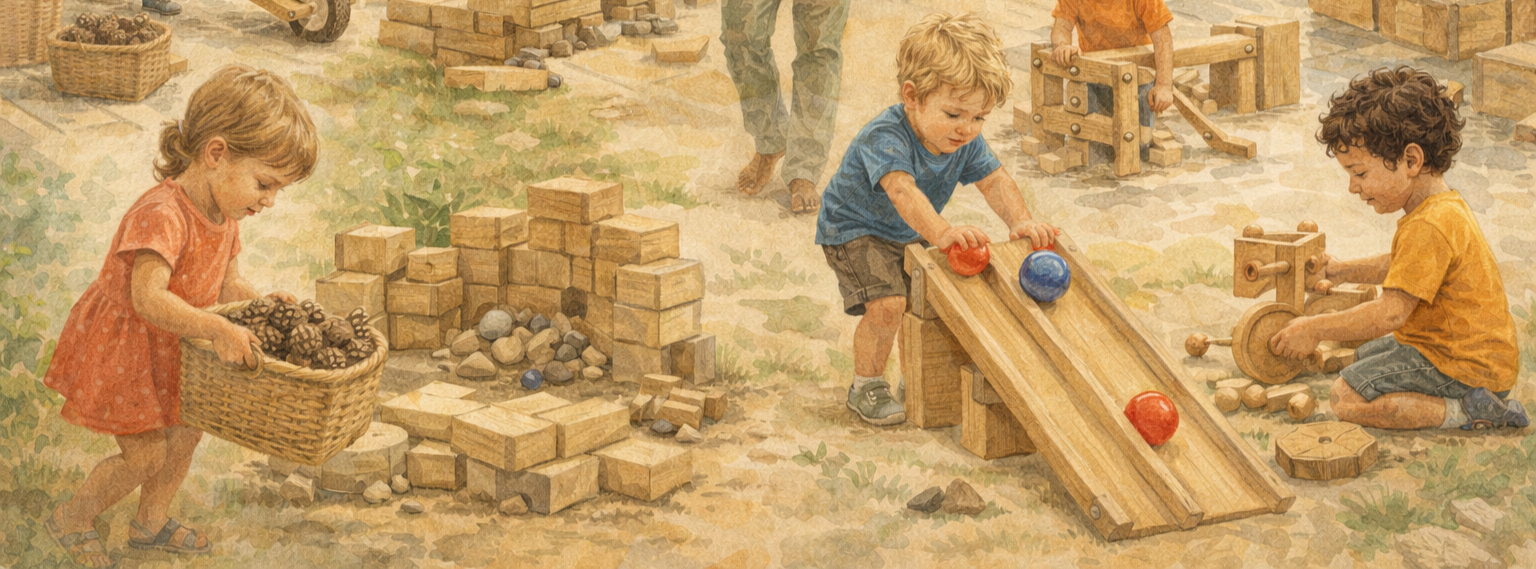
These repeated patterns in children’s behaviour are known as schemas. Schemas help them to construct knowledge and understanding through play. Children are mini scientists, mathematicians and architects, and the schemas they develop assist them as they go on to apply that knowledge to new situations and experiences they come across.
Of course, when they are very small, children explore with their senses and by their interactions with you; by smelling, touching, tasting, looking and hearing. They’re not attaching much meaning beyond the basic ‘If I make a noise, someone will come and find me and make me feel better’. But as they grow, they’ll start to wonder about what happens to different sorts of objects as they toss them off a highchair. They’ll find out that the harder the object, the more noise it makes when it hits the ground. They’re learning about friction, gravity, and the permanence of things.
For example, it’s just fallen on the floor, it hasn’t disappeared altogether.
As a child’s schema knowledge becomes more complex, they will begin to create relationships between different ideas, and use schemas to back up those thoughts and ideas; to gain an understanding of cause and effect.
Here at KatieB Kids, our child-centred approach to early years education means that we have a keen interest in children’s schemas. We build on them and encourage our little ones to put them together and explore their worlds. We observe the different schemas different children favour and plan activities which stimulate their interests, while still challenging their learning and development.
Not sure of your child’s schema? Try our quiz below!
To gain an insight into your child’s schema and how to support it, for each question, choose the answer that feels most like your child. At the end, you can find out which schema they are exploring most strongly and, more importantly, how you can use this to increase their engagement in activities.
1. Your child often:
A. Carries objects from place to place
B. Throws, drops, or pushes things
C. Fills, empties, or hides objects
D. Spins or turns objects
2. They are most drawn to:
A. Bags, baskets, or ways to move items
B. Watching things fall or travel through the air
C. Boxes, dens, or enclosed spaces
D. Wheels, lids, or objects that rotate
3. During play, they tend to:
A. Line things up or arrange them with care
B. Experiment with force (pushing, knocking, launching)
C. Wrap, cover, or put things inside others
D. Climb, hang, or explore being upside down
4. Outdoors, they are most interested in:
A. Moving natural objects like sticks or stones
B. Dropping or throwing from heights
C. Sitting inside small or hidden spaces
D. Spinning, twirling, or running in circles
5. When something interrupts their play, they are likely to:
A. Return to moving or reorganising items
B. Repeat the action to see what happens again
C. Rebuild, rewrap, or reconnect what was there
D. Go back to spinning or repositioning their body
6. When given a new object, your child tends to:
A. Take it somewhere else or add it to a collection
B. Test how it moves by pushing, throwing, or dropping
C. Put it inside something or combine it with other items
D. Turn it around, spin it, or examine it from different angles
7. Your child seems most focused when they are:
A. Transporting or organising items with purpose
B. Watching movement like rolling, falling, or flying
C. Creating spaces, hiding things, or joining items
D. Moving their body in dynamic ways (spinning, climbing)
8. When solving a problem in play, they often:
A. Move pieces around until it feels “right”
B. Try different levels of force or direction
C. Fit things together, take apart, or enclose
D. Adjust their position or viewpoint to understand
9. You might notice your child repeating:
A. Carrying or placing objects in the same way
B. Dropping, throwing, or watching movement again and again
C. Filling, emptying, wrapping, or enclosing repeatedly
D. Spinning, turning, or changing body position frequently
If your answers were…
Mostly A’s, click here
Mostly B’s, click here
Mostly C’s, click here
Mostly D’s, click here
It’s important to remember, though, that children are not one “type.” They move fluidly between schemas as their curiosity grows. By noticing these patterns, we can respond in ways that nurture confidence, deepen curiosity, and support emotional wellbeing.
Because when we follow the child, we don’t just see what they are doing; we begin to understand why.